
Have you ever wondered why people keep looking for another economic theory and explanation of their behaviour even despite we already have many of these? Do you know why during crisis people, even governments, instead of avoiding the economic slowdown behave as if they wanted to make the crisis worse? The answer is hidden in our minds where our feelings make us behave in an irresponsible way, which would be hard to explain to someone looking at us from a perspective.
Traditional economic models assume that individuals are rational actors who make decisions to maximize their utility. However, this assumption often falls short in explaining real-world behaviors. This is where Behavioral Economicscomes in. It integrates insights from psychology, judgment, decision making, and economics to generate a more accurate understanding of human behavior.
The reason why humans came up with a new field of study such as Behavioral Economics is because emotions play a significant role in decision-making processes. For instance, fear and uncertainty can lead to economic decisions that seem irrational, such as panic selling during a market downturn. Similarly, overconfidence can result in risky investment decisions. During economic crises, it’s common for governments to implement austerity measures, such as reducing public spending, in an attempt to reduce debt. However, these measures can exacerbate the recession by reducing overall demand in the economy. This is known as the paradox of thrift, which suggests that while saving might be beneficial for an individual, when everyone starts to save more, it can lead to a decline in aggregate demand, further deepening the recession. Contrary to the instinct to cut back during a recession, many economists argue for the need for economic stimulus. This can take the form of increased government spending, tax cuts, or lowering interest rates to encourage borrowing and investment. The goal is to increase demand and kick-start the economy.
The example clearly shows how important it is to be aware of our imperfections in the process of decisions-making.
In historical context, the Great Depression offers a striking example of how emotions and economic decision-making intersect. President Franklin D. Roosevelt’s response to the crisis, embodied in the New Deal, emphasized increasing investment and expenditures to combat the Depression’s devastating effects. Roosevelt’s proactive approach underscores the importance of understanding and addressing psychological factors in times of economic turmoil. By prioritizing confidence-building measures and stimulating demand, Roosevelt not only provided immediate relief but also laid the groundwork for long-term recovery.
Now I want to discuss a situation not so distant when many biases at once led to global catastrophe in the economy. Let’s dig into people’s mind during the housing market bubble and subsequent crash in 2007-2008. Lenders and homeowners alike were carried away by a wave of overconfidence and optimism during the bubble. Due to their unrealistic expectations that home values would rise forever, many homebuyers took on mortgages they couldn’t afford. In the meanwhile, lenders disregarded conventional risk evaluations in favor of quick payouts.
Their sense of unjustified assurance caused them to become oblivious to the dangers and weaknesses that are present in the property market, which resulted in hasty decisions and unsustainable behaviors. Understanding the risks associated with overconfidence can encourage people and organizations to take a more measured and responsible approach, one that is based on humility and a readiness to accept uncertainty.
A strong bandwagon effect resulted from the ardent optimism and excitement surrounding the housing market, which made people feel obliged to join in on the speculative frenzy. The housing bubble gained more traction because of this herd mentality since consumers relied more and more on peer pressure and social validation to make decisions.
The widespread notion that homes values would constantly grow acted as a powerful anchor throughout the housing market bubble, influencing industry perceptions of risk and value. Due to this anchoring bias, there were risky complacencies about the possible repercussions of a market crash, as well as exaggerated values and loose lending criteria.
Systemic shortcomings in the institutions and regulatory structures in charge of monitoring the financial markets were also made clear by the collapse of the housing market. A culture of moral hazard was fostered by regulatory capture, a lack of enforcement, and distorted incentives, which encouraged risky behavior and gave financial institutions the confidence to chase profit at the price of stability and caution.
Those who managed to resist the prevailing tide of irrational exuberance emerged as unlikely victors in one of the most significant economic crises of the 21st century. Among them was investor Michael Burry, whose foresight and analytical rigor enabled him to foresee the impending collapse of the housing bubble. As depicted in the film “The Big Short” (2015), Burry’s contrarian stance and unwavering commitment to rational analysis positioned him to profit handsomely from the crisis, earning him a place in financial lore as one of the few who dared to challenge the prevailing narrative and bet against the unsustainable trends of the housing market. Burry’s success serves as a compelling reminder of the power of rationality and independent thinking in navigating turbulent economic waters, underscoring the importance of skepticism, due diligence, and a willingness to swim against the tide in the pursuit of long-term prosperity.
The Stanford marshmallow experiment
Undoubtfully, people would behave differently if only were not experienced by so many biases at once. In the experiment conducted by Walter Mischel was proven that when people do not see the reward, they are able to resist the instant gratification.
Children in the experiment had two options: they could wait fifteen minutes to receive two goodies, or they could take one treat from the table. They were tested under a variety of circumstances, such as having both incentives in the room or hiding them while the child waited. 75% of people are able to postpone satisfaction in order to receive a greater reward when the snack is not in front of them.
When it came time for the kids to see both therapies, none of them in the study could wait fifteen minutes. However, 75% of people are able to postpone satisfaction in order to receive a greater reward when the snack is not in front of them.
These findings have significant ramifications for real-world situations, especially in areas like eating habits and money management. These findings can be used to inform strategies that increase difficulty in spending or hide unhealthy food from view, which will help in decision-making and goal-achieving.
The study also emphasizes the developmental nature of self-control, emphasizing how the capacity to postpone gratification is a skill that develops over time. The development of these skills is essential since it is linked to a number of favorable adult outcomes, such as better stress management, healthier lifestyle choices, and higher academic accomplishment.
REFERENCES
- Hitchcock, J. (2023, February 12). Present bias – everything you need to know. InsideBE. https://insidebe.com/articles/present-bias/
- Kenton, W. (2024, April 24). What is behavioral economics? Theories, goals, and applications. Investopedia. https://www.investopedia.com/terms/b/behavioraleconomics.asp
- Big Data and Implications of Behavioral Economics – James Lind Institute | Public Health School in Switzerland. (n.d.). https://jliedu.ch/big-data-and-implications-of-behavioral-economics/
- Centre, L. P. (2024, January 4). Behavioural economics: understanding the psychology of decision-making. https://www.lpcentre.com/articles/behavioural-economics-understanding-the-psychology-of-decision-making
- 9 Eye-Opening Examples of Behavioural Economics in Marketing | Digivate. (2023, September 15). Digivate. https://www.digivate.com/blog/digital-marketing/behavioural-economics-marketing/
- 3 Applications of behavioral economics in the real world – the Decision Lab. (n.d.). The Decision Lab. https://thedecisionlab.com/insights/business/3-applications-of-behavioral-economics-in-the-real-world
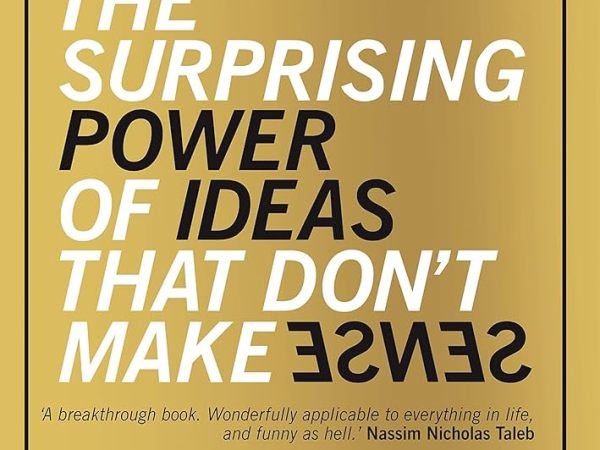
“The Alchemy” by Rory Sutherland
Rory Sutherland’s “Alchemy” challenges the belief that logical reasoning is essential for effective decision-making. He introduces concepts like psycho-logic and satisficing, emphasizing the emotional and symbolic aspects of human behavior to uncover creative solutions beyond strict rationality.
Keep reading
The Role of Carry Trading in the Recent Market Crash
In the intricate world of finance, carry trading stands out as a strategy that can yield substantial returns by exploiting interest rate differentials between currencies.
Keep reading
The Gig Economy: A Modern Trend with Untapped Potential
The gig economy, driven by digital platforms and workforce preferences, offers businesses agility, cost savings, access to diverse talent, and innovation. However, it also poses challenges requiring strategic adaptation for long-term success.
Keep readingSomething went wrong. Please refresh the page and/or try again.
 gabrieltrabka.com
Leave a comment