
Simon Sinek’s book “Leaders Eat Last” offers a provocative examination of leadership and how it affects corporate culture. The phrase “Marine Corps Officers eat last” refers to the custom of putting the needs of people under their care before their own.
The idea of the “Circle of Safety” serves as the book’s main topic. According to Sinek, competent leaders foster a culture of safety at work that fosters collaboration, trust, and optimal performance. Members of the team feel protected from outside threats and internal rivalry within this protective circle.
Empathy and support are given top priority by leaders who foster this circle, fostering an atmosphere that promotes growth for both the organization and its members. They are aware that a poisonous work environment frequently results from higher-ups’ deeds or inactions more so than the actual task itself.
The author highlights the importance of empathy as a fundamental element of successful leadership. He recounts the tale of Captain Mike “Johnny Bravo” Drowley, a brave and empathetic leader who put his own life in peril while on a hazardous mission in Afghanistan. This narrative serves as further evidence that leaders who empathetically interact with their team members cultivate a climate of trust and safety.
Sinek explores how early humans had to cooperate constantly in order to survive. He contends that endorphins, dopamine, serotonin, and oxytocin are the four neurotransmitters that create our experiences and determine our innate desire for safety. He also brings up cortisol, a stress hormone that is secreted in response to perceived threat.
These substances shape our reactions to circumstances and our propensity to revisit those circumstances later on. This biological wiring emphasizes how crucial it is to establish a secure and encouraging work environment.
The importance of leadership
According to the book, an organization’s culture is shaped by the depth and breadth of leadership that flows from the executive board to management. The leader’s leadership is directly reflected in the culture, which in turn reflects back to them.
A culture of success is fostered by leaders who put the needs of their subordinates before their own or the pursuit of quick money. They are aware that businesses do not have to choose between their employees and profits—this is a fallacious belief that frequently deceives executives into taking harsh actions to achieve profits at any costs.
Conclusions
“Leaders Eat Last” challenges conventional wisdom on leadership. It emphasizes how crucial building a “Circle of Safety,” empathy, and trust are to developing a productive workplace culture. According to Sinek, when leaders eat last, they foster a culture where everyone feels respected and safe, which promotes harmony and productivity at work.
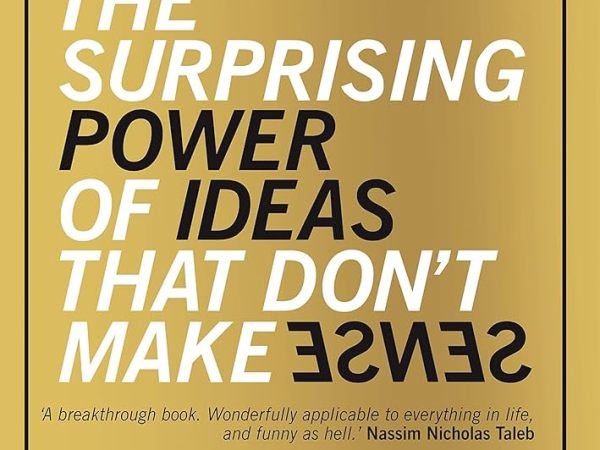
“The Alchemy” by Rory Sutherland
Rory Sutherland’s “Alchemy” challenges the belief that logical reasoning is essential for effective decision-making. He introduces concepts like psycho-logic and satisficing, emphasizing the emotional and symbolic aspects of human behavior to uncover creative solutions beyond strict rationality.
Keep reading
The Role of Carry Trading in the Recent Market Crash
In the intricate world of finance, carry trading stands out as a strategy that can yield substantial returns by exploiting interest rate differentials between currencies.
Keep reading
The Gig Economy: A Modern Trend with Untapped Potential
The gig economy, driven by digital platforms and workforce preferences, offers businesses agility, cost savings, access to diverse talent, and innovation. However, it also poses challenges requiring strategic adaptation for long-term success.
Keep readingSomething went wrong. Please refresh the page and/or try again.
 gabrieltrabka.com
Leave a comment