
Market failures are interesting phenomena that arise when an unfettered free market is unable to distribute resources effectively. Understanding these events, their causes, and how they affect society is essential. Let’s investigate this subject and look at some actual instances.
A market failure occurs when the supply of a particular good or service is insufficient to meet demand, resulting in an inefficient allocation of resources. This inefficiency can lead to a loss of economic and social welfare.
Types of Market Failures
- Public Goods: These are non-excludable and non-rivalrous items. In other words, no one can be effectively prevented from utilizing the good, and the consumption of one individual does not limit its availability to others. National defense, street lighting, and public parks are a few examples. The issue emerges when the market fails to supply enough of these products because companies are unable to fairly charge for their use.
- Externalities: These happen when a party not directly participating in the transaction is impacted by the production or consumption of a good. Both positive and negative externalities are possible (costs and benefits). A well-known illustration of a negative externality is pollution from factories that has an impact on the local ecology and population.
- Monopolies: When one business or organization controls all or almost all of the market for a certain kind of good or service, it is called a monopoly. Lower quality and innovation as well as greater prices may result from this restriction.
- Information Asymmetry: This occurs when one party in a transaction has more or better information than the other. This often happens in situations where the seller knows more than the buyer, although the reverse can also occur.
The Tragedy of the Commons
In economics and environmental science, the term “tragedy of the commons” refers to a situation in which individual users have free access to a resource without being constrained by formal rules governing use or access, act independently in their own self-interest and, against the interests of all users collectively, cause the resource to be depleted through their disorganized behaviour.
The tragedy arises from the fact that the costs of exploitation are shared by everyone for whom the resource is available, while the profits of exploitation go to specific people or groups who are all driven to utilize it to the fullest extent possible.
Overfishing in the oceans is one of the most prevalent occurrences in the real world. Fishermen are financially motivated to catch as many fish as they can because if they don’t, someone else will. As a result, the number of fish decreases, which is detrimental to society overall.
How Can We Correct Market Failures?
Correcting inefficiencies by intervention is frequently necessary to prevent market failures. Regulating bodies have the authority to control negative externalities. To make a corporation pay for its activities, for example, a government can restrict how much pollution it allows.
Governments can deter particular behaviors via levies in addition to regulations. For example, a tax on carbon emissions can make it more costly for businesses to pollute, which incentivizes them to discover greener methods to do business.
However, governments can also promote positive externalities by offering subsidies. Renewable energy sources can become more competitive with non-renewable sources if they receive subsidies.
In certain situations, defining distinct property rights can assist in resolving the issue. Ownership of a resource gives people and businesses an incentive to use it wisely.
When it comes to public goods, the government or a neighborhood group may offer them. This guarantees that everyone can access the good, irrespective of their financial situation.
Market failures can occasionally arise from people’s incomplete knowledge of the effects of their choices. Increasing knowledge and consciousness can assist individuals in making better judgments that consider the ramifications for society at large.
Recall that these solutions have drawbacks of their own and must be carefully implemented to guarantee their efficacy and equity. It’s also critical to remember that one scenario may not function in another, thus in order to come up with a suitable answer, it’s imperative to comprehend the particulars of each market failure.
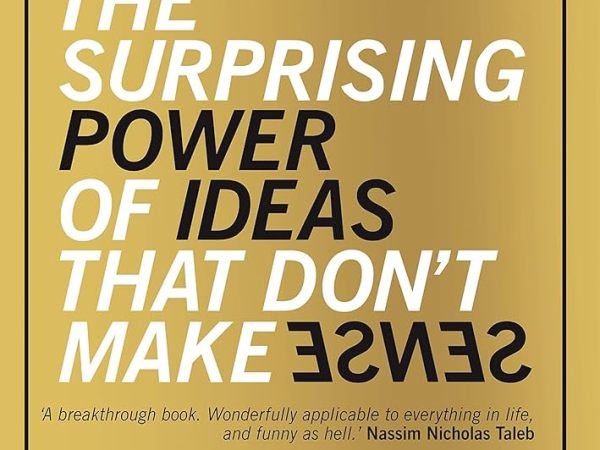
“The Alchemy” by Rory Sutherland
Rory Sutherland’s “Alchemy” challenges the belief that logical reasoning is essential for effective decision-making. He introduces concepts like psycho-logic and satisficing, emphasizing the emotional and symbolic aspects of human behavior to uncover creative solutions beyond strict rationality.
Keep reading
The Role of Carry Trading in the Recent Market Crash
In the intricate world of finance, carry trading stands out as a strategy that can yield substantial returns by exploiting interest rate differentials between currencies.
Keep reading
The Gig Economy: A Modern Trend with Untapped Potential
The gig economy, driven by digital platforms and workforce preferences, offers businesses agility, cost savings, access to diverse talent, and innovation. However, it also poses challenges requiring strategic adaptation for long-term success.
Keep readingSomething went wrong. Please refresh the page and/or try again.
 gabrieltrabka.com
Leave a comment