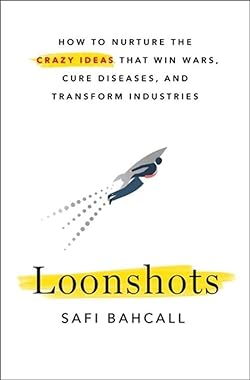
Within the domain of business and innovation, there exist concepts that not only question established practices but also completely transform entire sectors. These concepts are what Safi Bahcall calls “Loonshots,” since they are frequently written off as being too radical or unrealistic. Bahcall examines the origins, development, and significance of these revolutionary concepts in his book.
A “Loonshot” is an abandoned endeavor whose proponent is written off as insane and is generally disregarded. These are the concepts that appear completely absurd until the point at which it is unimaginable that anyone could have approached things any other way. Bahcall presents the idea of Loonshots, which include tales of thieves, geniuses, and kings, as well as concepts ranging from the spread of fires in forests to the search for terrorists online.
Key takeaways
Bahcall explains the abrupt change in an organization’s attitude toward new ideas by drawing on the science of phase transitions. Similar to how water becomes ice at a specific temperature, minor structural changes might alter an organization’s perspective on radical ideas. Controlling these transitions can be aided by recognizing these changes.
The idea of structural segregation is one of the book’s most important concepts. It entails striking a balance between supporting the organization’s successful current components (the franchise) and fostering unconventional ideas (the Loonshots). It is possible to exchange ideas freely without endangering the current success by keeping these two apart.
Fostering a culture that embraces innovative thinking and promotes taking risks is essential to developing Loonshots. This entails encouraging creative thinking even when it first fails and making sure that the fear of failing doesn’t impede originality.
Leaders are essential to the development of Loonshots. They must establish an atmosphere that fosters creativity and provides the means for it to flourish. This entails interacting casually with teams, offering assistance when needed, and then removing yourself to allow creativity to flow.
Conclusion
We can establish an atmosphere that supports Loonshots by comprehending the science behind phase transitions, separating organizational structures structurally, encouraging an innovative culture, and taking inspiration from successful real-world initiatives. This not only encourages development and progress but also moves us closer to a time when ground-breaking invention and imaginative problem-solving will characterize the future.
Let’s keep in mind that the Loonshot of today might become the industry standard of tomorrow as we move into this new future. So let’s celebrate the oddballs, rebels, troublemakers, round pegs in square holes, and everyone else who has an unconventional viewpoint and doesn’t care for the status quo or regulations.
“The Alchemy” by Rory Sutherland
Rory Sutherland’s “Alchemy” challenges the belief that logical reasoning is essential for effective decision-making. He introduces concepts like psycho-logic and satisficing, emphasizing the emotional and symbolic aspects of human behavior to uncover creative solutions beyond strict rationality.
Keep reading
The Role of Carry Trading in the Recent Market Crash
In the intricate world of finance, carry trading stands out as a strategy that can yield substantial returns by exploiting interest rate differentials between currencies.
Keep reading
The Gig Economy: A Modern Trend with Untapped Potential
The gig economy, driven by digital platforms and workforce preferences, offers businesses agility, cost savings, access to diverse talent, and innovation. However, it also poses challenges requiring strategic adaptation for long-term success.
Keep readingSomething went wrong. Please refresh the page and/or try again.
 gabrieltrabka.com
Leave a comment