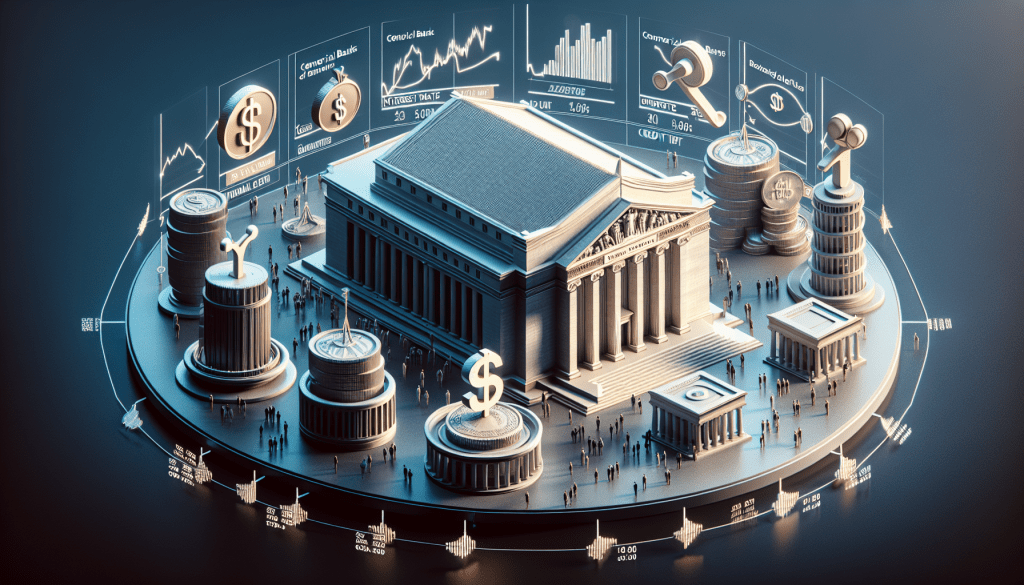
Central banks establish monetary policy, which is essential for controlling the economy. In order to manage inflation and stabilize the economy, interest rates and the money supply are manipulated. However, what is the impact of a central bank decision on the overall economy? The transmission of these monetary policy choices via commercial banks holds the key to the solution. Let’s explore this intriguing procedure.
Monetary Policy and Commercial Banks
The interest rates that commercial banks provide on deposits and charge on loans are directly impacted when a central bank modifies its policy rate. For example, commercial banks usually cut their interest rates in response to a central bank’s reduction in the policy rate. Due to the decreased cost of borrowing, more people and businesses are taking out loans for investment and consumption, which boosts the economy.
On the other hand, commercial banks raise their interest rates in response to a rise in the central bank’s policy rate, increasing the cost of borrowing. In order to prevent an overheated economy and control inflation, this inhibits lending and slows down economic activity.
The Transmission Mechanism
The monetary policy transmission mechanism is the process by which monetary policy changes impact the economy. It involves multiple channels, such as the channels for credit, exchange rates, and interest rates.
The Interest Rate Channel
The easiest to understand and most straightforward channel is the interest rate channel. The short-term interest rates are almost instantly impacted by changes in the policy rate made by the central bank. Subsequently, these fluctuations extended to long-term interest rates, impacting both household and corporate investment and consumption choices.
The Credit Channel
The credit channel works through the balance sheets of banks, firms, and households. When the central bank lowers the policy rate, not only does it make loans cheaper, but it also increases the value of assets such as bonds, improving the balance sheets of banks. This makes banks more willing to lend, further stimulating economic activity.
The Exchange Rate Channel
The exchange rate channel works through the effect of interest rates on the foreign exchange market. When the central bank lowers the policy rate, it typically leads to a depreciation of the domestic currency as investors move their funds to foreign markets in search of higher returns. This makes domestic goods cheaper for foreign buyers, boosting exports and stimulating economic activity.
Real-World Case Studies
The United States during the Great Recession
The U.S. Federal Reserve sharply reduced its policy rate to almost zero during the Great Recession of 2008–2009 in an effort to boost the economy. But because of how bad the financial crisis was, banks were unwilling to lend, which made it harder to implement monetary policy. As a result, in order to directly stimulate the economy without going via the banking system, the Federal Reserve used unconventional monetary measures including quantitative easing.
The Eurozone during the Sovereign Debt Crisis
An analogous issue confronted the European Central Bank (ECB) amid the European Sovereign Debt Crisis. Because of variations in bank health, the Eurozone’s monetary policy was not uniformly implemented despite the reduction of its policy rate. In response, the ECB gave banks long-term loans to strengthen their balance sheets and get the monetary policy transmission mechanism back up and running.
Conclusions
To sum up, banks are vital in transferring the consequences of monetary policy decisions to the overall economy. Gaining a knowledge of this procedure is essential to comprehending how central banks oversee the economy and preserve stability. The transmission mechanism for monetary policy will change along with the financial sector, posing new opportunities and problems for both central banks and economists.
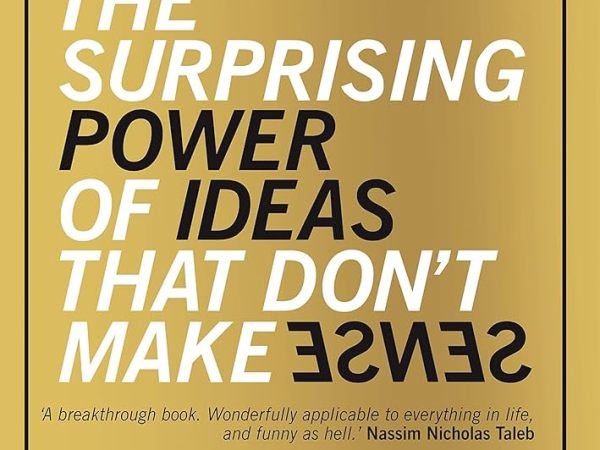
“The Alchemy” by Rory Sutherland
Rory Sutherland’s “Alchemy” challenges the belief that logical reasoning is essential for effective decision-making. He introduces concepts like psycho-logic and satisficing, emphasizing the emotional and symbolic aspects of human behavior to uncover creative solutions beyond strict rationality.
Keep reading
The Role of Carry Trading in the Recent Market Crash
In the intricate world of finance, carry trading stands out as a strategy that can yield substantial returns by exploiting interest rate differentials between currencies.
Keep reading
The Gig Economy: A Modern Trend with Untapped Potential
The gig economy, driven by digital platforms and workforce preferences, offers businesses agility, cost savings, access to diverse talent, and innovation. However, it also poses challenges requiring strategic adaptation for long-term success.
Keep readingSomething went wrong. Please refresh the page and/or try again.
 gabrieltrabka.com
Leave a comment