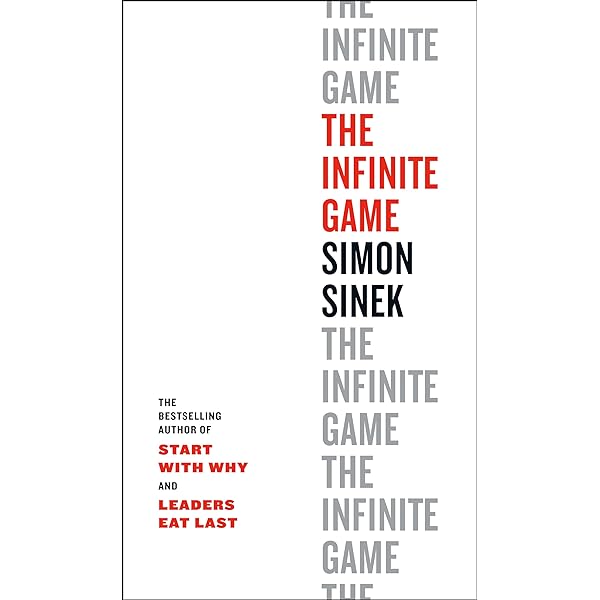
The core concept of “The Infinite Game” is a straightforward yet deep one: business is an infinite game in which the object is to keep playing rather than a finite game with obvious winners or losers. This idea, which is taken from “Finite and Infinite Games” by James P. Carse, questions the conventional definition of success and encourages us to adopt an outlook that is centred on long-term objectives and ongoing development. The book gives us couple lessons on how to become an infinite leader and change the status quo.
- Infinite games are all around us: Infinite games are played by unknown players, have no exact or agreed-upon rules, and have an infinite time horizon. There is no finish line, no practical end to the game, so there is no such thing as “winning” an infinite game
- Business is an infinite game: The game of business fits the very definition of an infinite game. We may not know all of the other players and new ones can join the game at any time. All the players determine their own strategies and tactics and there is no set of fixed rules to which everyone has agreed, other than the law
- The importance of a Just Cause: A Just Cause is a vision that a moon shot will help advance. It is the context for all our other goals, big and small, and all of our finite achievements must help to advance the Just Cause
- The role of worthy rivals: Worthy Rivals feel like competitors, but they can actually help us learn and improve. Analyzing a worthy rival will make you better at what you do. It’ll also help you gain clarity on why you’re doing it
- The need for resilience: Infinite games are all around us. There is no finish line, no practical end to the game, so there is no such thing as “winning” an infinite game. In an infinite game, the primary objective is to keep playing, to perpetuate the game
- The importance of trust: Trusting Teams is one of the essential practices that leaders must follow to have an Infinite Mindset. It means that you trust your team members to make decisions and take actions that align with the Just Cause
- The need for existential flexibility: Existential Flexibility is another essential practice that leaders must follow to have an Infinite Mindset. It means that you are open to new information and willing to adapt your opinions and strategies as needed. Example is Walt Disney when he quitted his own company, because he had an idea how better achieve his vision.
- The importance of courage to lead: Courage to Lead is another essential practice that leaders must follow to have an Infinite Mindset. It means that you are willing to take risks and make difficult decisions to advance the Just Cause
- The need for consistency over intensity: In an infinite game, consistency is more important than intensity. You don’t know when you will see results, but you know you will eventually
- The importance of maintaining an infinite mindset: Maintaining an infinite mindset is hard. We will stray from the path because we are human. Finite games are seductive. They can be fun, exciting, and addictive. Winning is like a shot of dopamine. Sometimes greed, fear, ambition, ignorance, external pressure, competing interests, and ego will get the best of us
Ultimately, “The Infinite Game” represents a paradigm shift in how we view success and leadership. Whether we are CEOs of large companies or leaders in our personal lives, it is a call to action for all of us. We may build a future that is not just profitable but also advantageous to all stakeholders throughout time by accepting the infinite game. Now let’s enter the endless game and explore its possibilities. The options are endless and the game is lengthy.
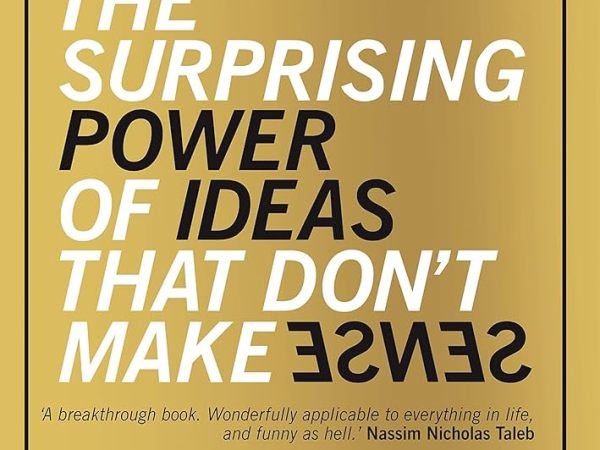
“The Alchemy” by Rory Sutherland
Rory Sutherland’s “Alchemy” challenges the belief that logical reasoning is essential for effective decision-making. He introduces concepts like psycho-logic and satisficing, emphasizing the emotional and symbolic aspects of human behavior to uncover creative solutions beyond strict rationality.
Keep reading
The Role of Carry Trading in the Recent Market Crash
In the intricate world of finance, carry trading stands out as a strategy that can yield substantial returns by exploiting interest rate differentials between currencies.
Keep reading
The Gig Economy: A Modern Trend with Untapped Potential
The gig economy, driven by digital platforms and workforce preferences, offers businesses agility, cost savings, access to diverse talent, and innovation. However, it also poses challenges requiring strategic adaptation for long-term success.
Keep readingSomething went wrong. Please refresh the page and/or try again.
 gabrieltrabka.com
Leave a comment