
“The Lean Startup” by Eric Ries is a book that provides a new approach to business development, which is particularly useful for startups. The book is based on lean principles and agile methodologies, and it emphasizes the importance of continuous testing, iteration, and learning from customer feedback.
Here are some of the most important lessons from the book:
- Entrepreneurship is a Learnable Process: The book emphasizes that entrepreneurship is not just about having a great idea or being in the right place at the right time. It’s a process that can be learned and mastered. This process involves continuously testing hypotheses with a minimal viable product (MVP), learning from the results, and adjusting the strategy accordingly
- The Importance of a Minimum Viable Product (MVP): The MVP is a product with just enough features to satisfy early customers and provide feedback for future product development. It’s a way to test business ideas with minimal resources and adjust them based on real-world feedback.
- Build-Measure-Learn Feedback Loop: This is a core concept in the Lean Startup methodology. The idea is to build a product or feature, measure its effectiveness in the market, and learn from the results. This feedback loop should be as fast as possible to minimize waste and increase the speed of learning.
- Validated Learning: This is a unique concept that Ries refers to as “validated learning.” This approach to learning is more accurate, concise, and quicker than traditional modes of market forecasting or corporate planning. It involves treating all business decisions as experiments to validate, focusing on understanding if the product should be built, and can form a sustainable business model.
- Pivot or Persevere: Based on the feedback from the MVP and the learnings from the Build-Measure-Learn loop, startups need to make a critical decision: pivot or persevere. A pivot is a strategic shift in direction that can be in response to feedback, while persevering is staying the course with the current strategy.
- Avoiding Waste: The book emphasizes that waste comes not from the inefficient organization of work but rather from working on the wrong things. Therefore, it’s crucial to validate assumptions and hypotheses before investing significant resources into them.
- The Importance of Action: The Lean Startup methodology encourages acting over extensive planning. By getting a product to market faster, startups can learn from real-world feedback and make necessary adjustments.
- Creating an Adaptive Organization: The book teaches how to build an adaptive organization that can regulate its own growth, at its own pace. It also emphasizes creating an innovative environment that generates new startups as a part of the company’s normal course of business.
The author mentions two types of Minimum Viable Products (MVPs)
- Concierge MVP: This type of MVP involves manually helping users accomplish their goals as a means of validating whether they have a need for what you’re offering. Building a product is not even necessary. For example, Aadvark, the Q&A service, initially routed questions to other users who experts via Instant Messaging routing were. In the early days, Aadvark staff would just manually post the questions to whomever was online to see who would answer.
- Wizard of Oz MVP: This MVP gives a certain impression of your solution from the outside, but the inner workings of the solution are something else. A good example of this is a service that appears to be fully automated but is powered by humans behind the scenes. This type of MVP is useful for testing the market demand for a product or service without investing heavily in development.
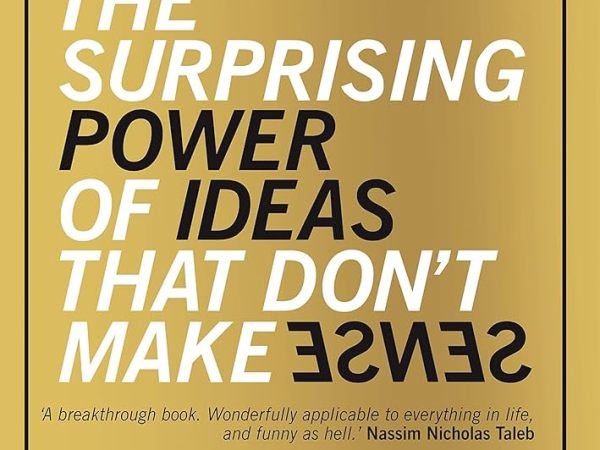
“The Alchemy” by Rory Sutherland
Rory Sutherland’s “Alchemy” challenges the belief that logical reasoning is essential for effective decision-making. He introduces concepts like psycho-logic and satisficing, emphasizing the emotional and symbolic aspects of human behavior to uncover creative solutions beyond strict rationality.
Keep reading
The Role of Carry Trading in the Recent Market Crash
In the intricate world of finance, carry trading stands out as a strategy that can yield substantial returns by exploiting interest rate differentials between currencies.
Keep reading
The Gig Economy: A Modern Trend with Untapped Potential
The gig economy, driven by digital platforms and workforce preferences, offers businesses agility, cost savings, access to diverse talent, and innovation. However, it also poses challenges requiring strategic adaptation for long-term success.
Keep readingSomething went wrong. Please refresh the page and/or try again.
 gabrieltrabka.com
Leave a comment